
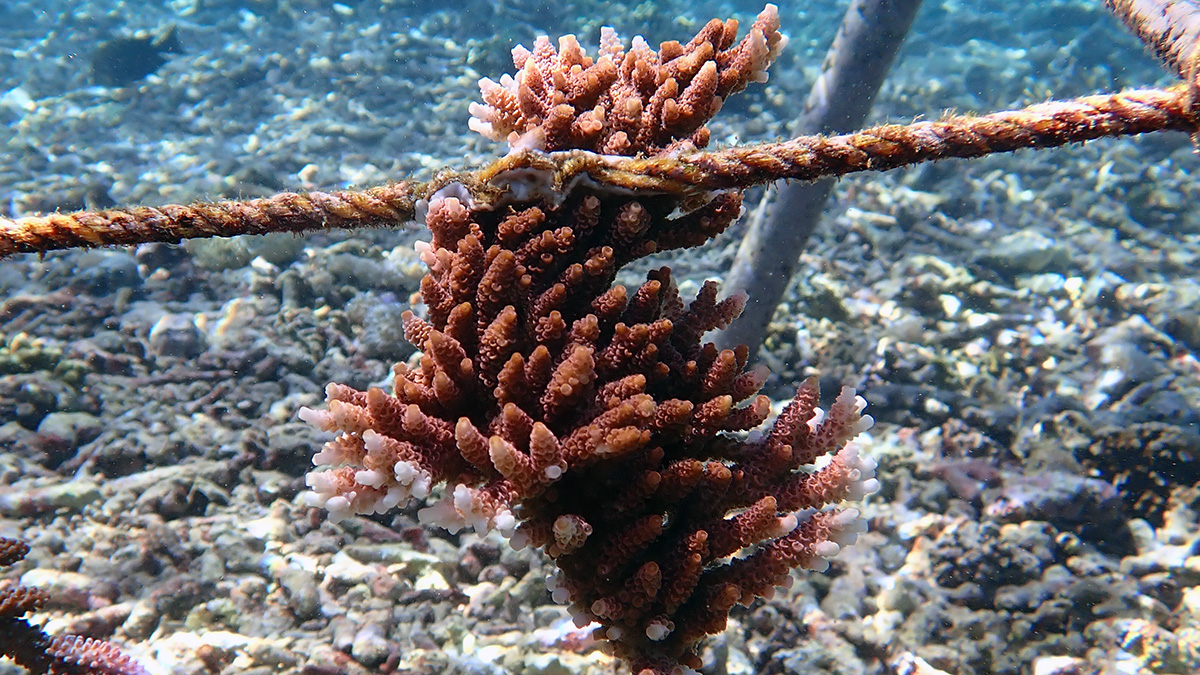
Batch Zero, Fully Adopted: All 20 of Our First Corals Have Found a Home
I want to start with the number, because it's the whole reason I'm writing this: 20 out of 20. Every coral in Batch Zero — our very first cohort of coral adoptables with Ocean Gardener in Bali — now has an adopter. Nothing left unclaimed. Batch Zero is done.
Getting here has honestly felt a lot like building a startup. Coordinating with the Ocean Gardener team on the ground, checking in on growth month over month, watching the adoptions come in one by one until there just weren't any corals left to adopt — it's the same rhythm as watching a signup graph tick toward a goal, except what we're actually tracking is a nursery in Nusa Penida filling back in with living coral.
A quick recap on why we exist
For anyone new here: Canopi is a nonprofit accelerator that helps nature scale its impact. Right now, that focus is coral-based NGOs and the local communities working alongside them, starting with our partnership with Ocean Gardener in Bali.
The problem we saw is a simple one. Incredible restoration organizations exist all over the world, doing the actual hard work of replanting reefs and forests, but most of them are stuck competing for the same shrinking pool of grants. We wanted to help them stop begging for scraps and start building funding sources they actually control — donations, adoptions, and regenerative travel that connects directly back to their work.
We measure our own impact in Delta: how much more of nature our partner organizations are able to restore once we've helped them build a real digital presence. With Ocean Gardener, that meant building the coral adoption platform itself, and then handling the donor engagement and awareness side so their team can stay focused on what they do best — growing coral. Batch Zero selling out completely is the first real proof of that Delta in action.
Three from the batch
Batch Zero was 20 corals. Below are three of them — picked because their growth over the same 90 days looks so different from one another, which is part of what makes this so fun to watch.
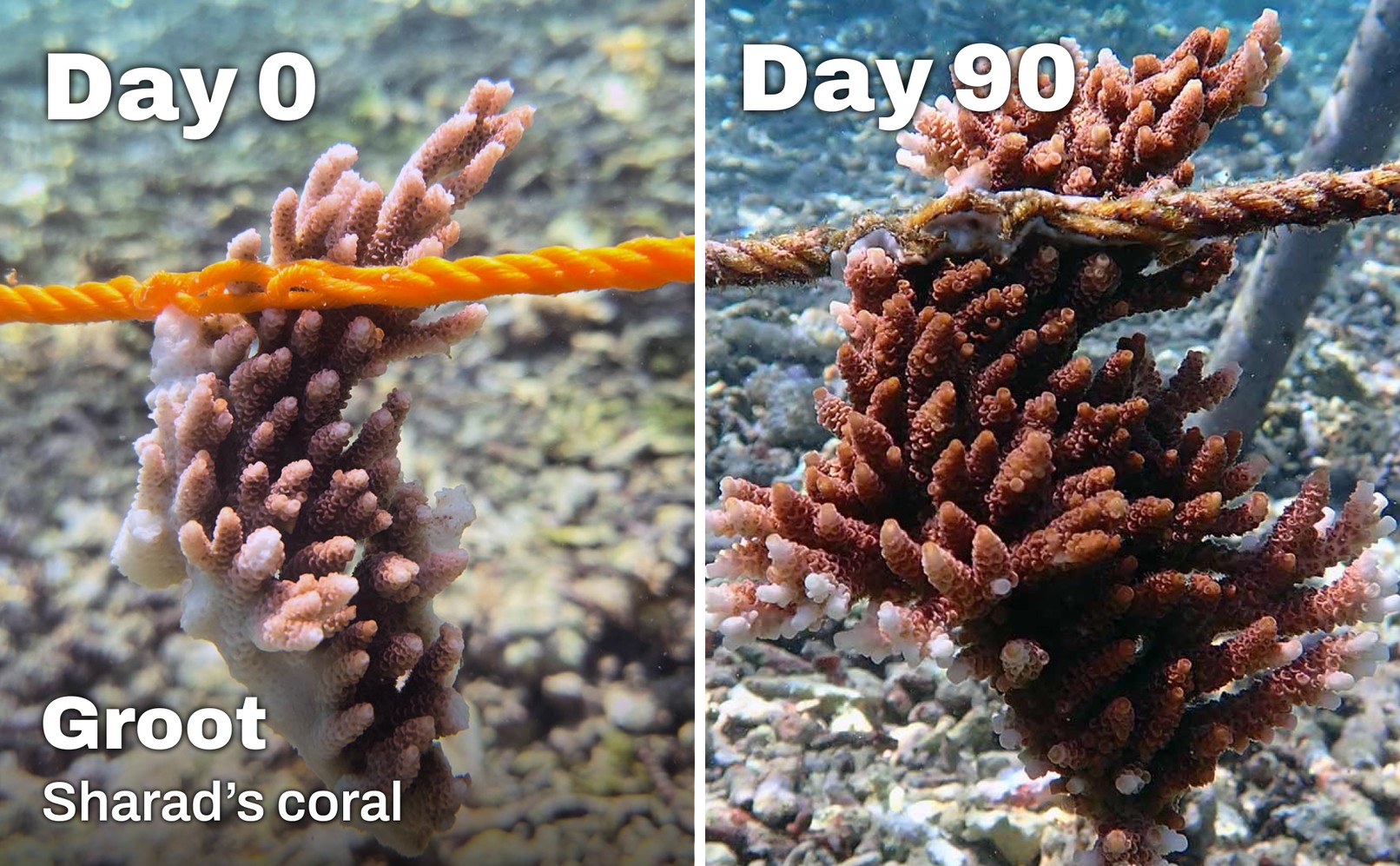
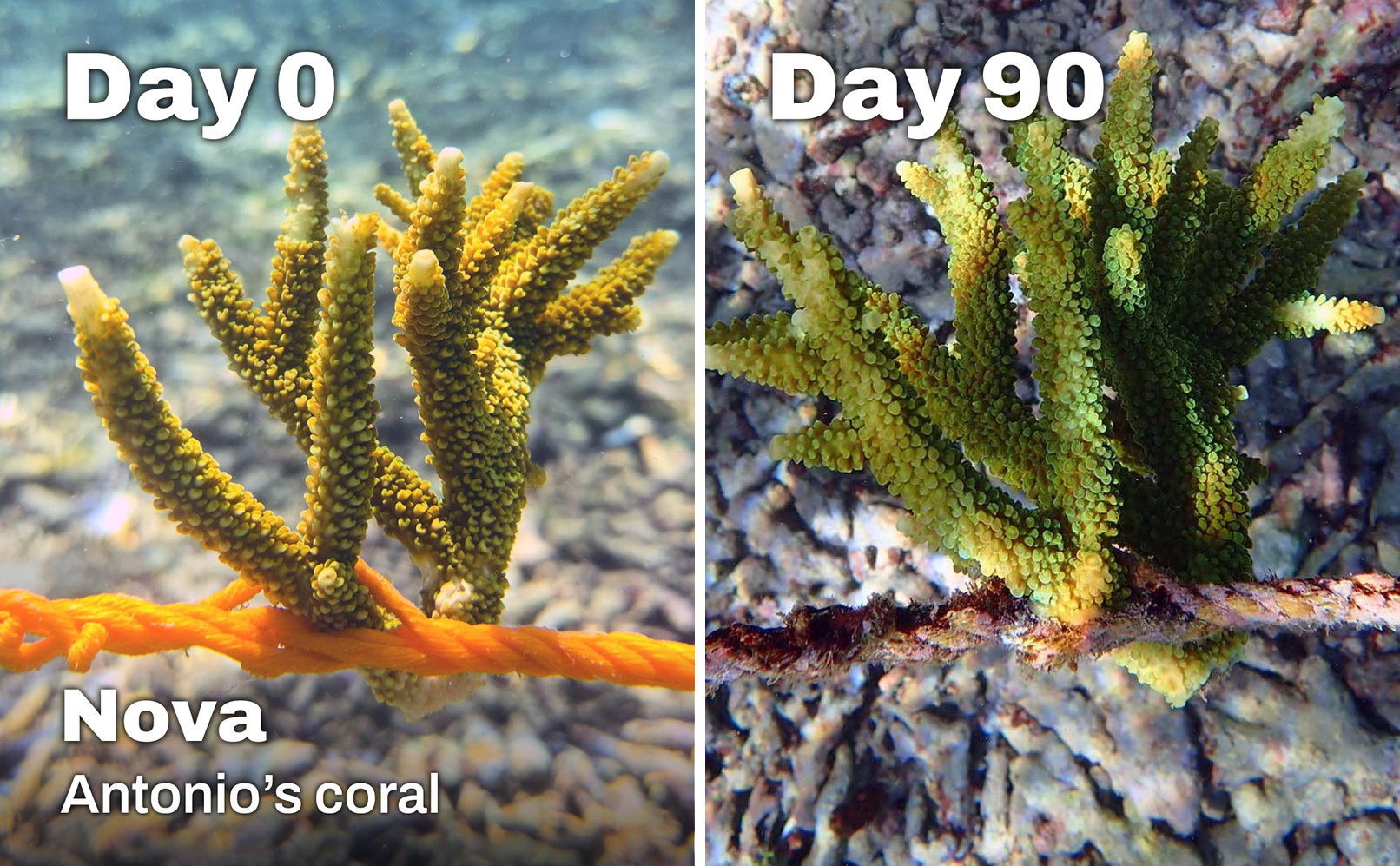
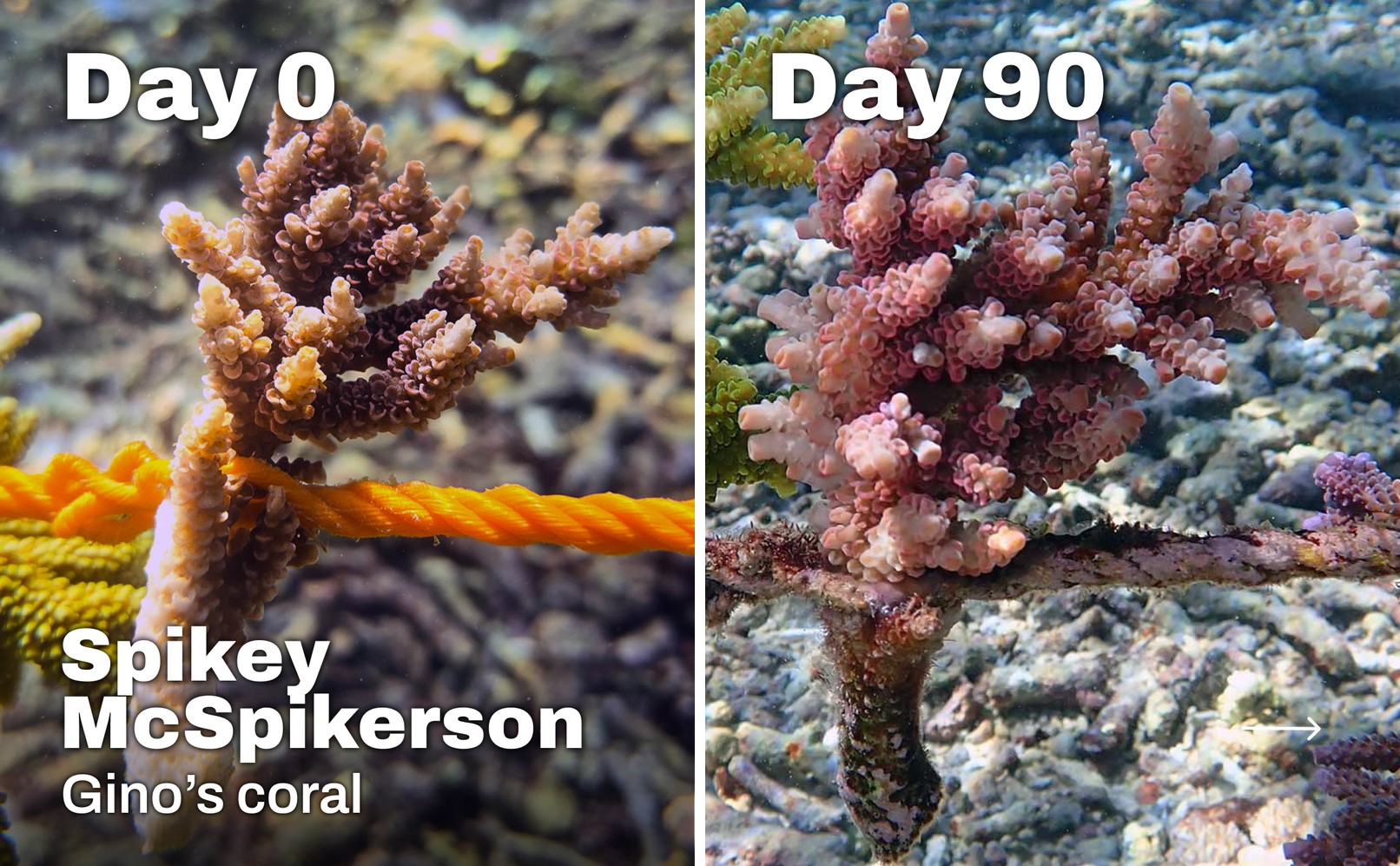
Every frame uses the same fixed mounting line running through it, so even without a ruler, you can eyeball roughly how much ground each one covered between Day 0 and Day 90. These are rough, eyeballed estimates rather than lab measurements, but the difference is obvious either way.
Groot, adopted by Sharad, looks to have roughly doubled in coverage by Day 90 — call it 80 to 100% more coral than where it started — with its color deepening from a pale pink-and-cream into a rich rust and burgundy.
Nova, adopted by Antonio, grew a little more modestly but just as clearly — somewhere around 40 to 50% more size and branch coverage, with its color shifting from a pale yellow-green into a deeper, more saturated green.
Spikey McSpikerson, adopted by Gino — yes, that's really its name, and no, we wouldn't change it — is the biggest mover of the three. What started as a handful of thin branches filled out into a wide, dense cluster that looks 2 to 3 times its Day 0 size.
Multiply that kind of growth across all 20 corals in Batch Zero, and you start to see why this milestone matters to us beyond the number itself.
You can see the full sequence on Instagram as well.
Why naming and photos matter more than they sound like they should
This is deliberate. We believe every organization is a digital organization now, whether they think of themselves that way or not, because the way people discover experiences — and decide where to put their money and their trust — happens online first. A coral you can name, watch, and check in on every month is a completely different experience from a line item in an annual report.
That's why, alongside the adoption platform, we also built out a monthly email journey for adopters. Every update is a small piece of education about how corals actually grow, what the nursery team is seeing on the reef, and why the work matters. The goal isn't just to report back — it's to turn every adopter into an advocate for the reef, someone who understands restoration well enough to talk about it, care about it, and bring other people in.
We bring the same lens we used building tech products in the past and apply it here: reduce friction, make progress visible, and give people a reason to come back. Selling out Batch Zero end to end is the first sign that lens works on this side of the world too.
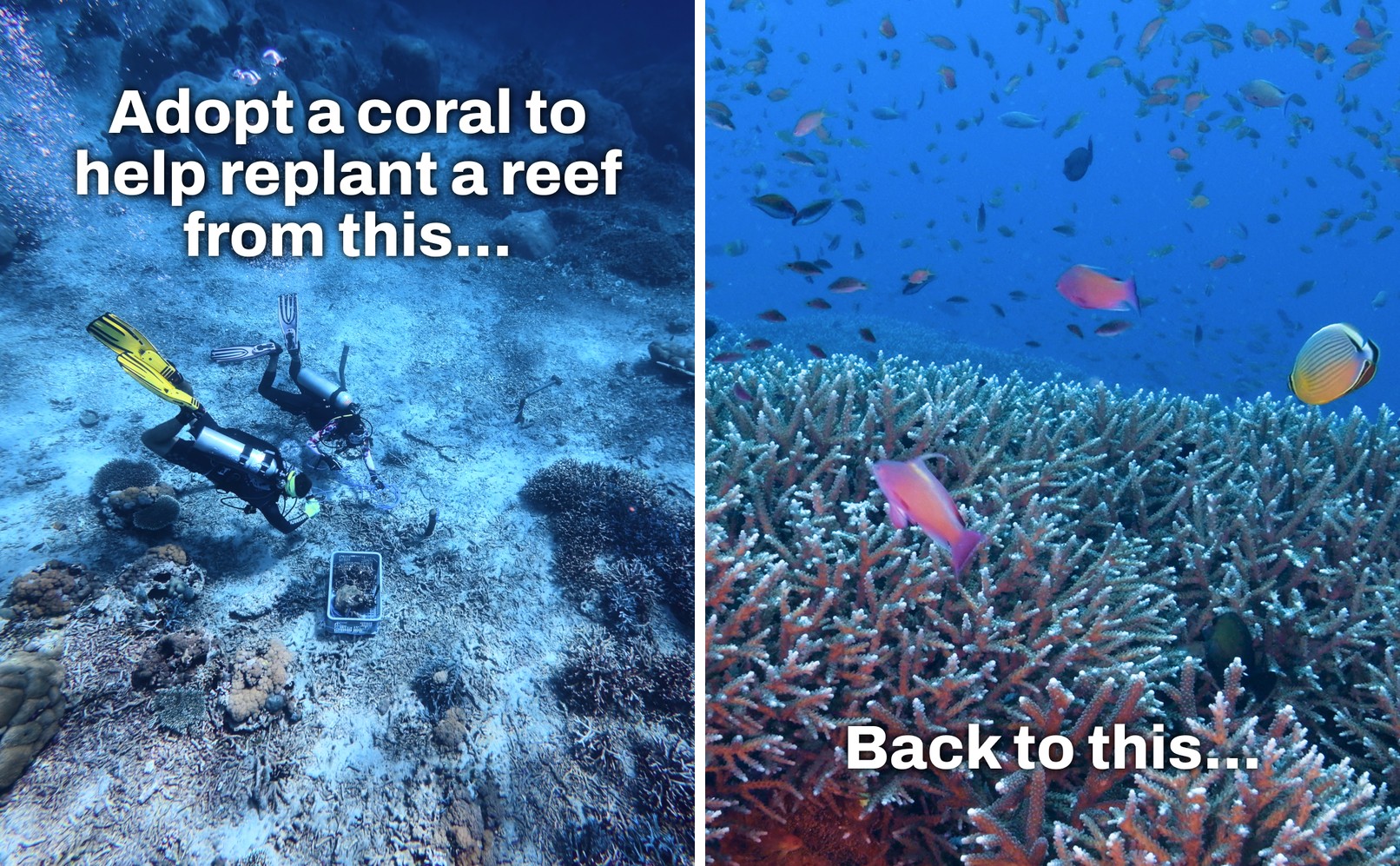
From this, to this
This is the whole point, in two photos. Every adoption starts with a fragment like this — a diver, a crate, a piece of coral no bigger than a hand, being carried out to the nursery. Multiply that by thousands of fragments, years of care from the Ocean Gardener team, and it becomes a living reef again.
Why this is a triple win
This collaboration works because everyone gets something they couldn't easily get on their own. Donors and travelers who want to do something real for the ocean finally have an easy, transparent way to participate. Ocean Gardener gets to stay focused entirely on restoration — planting, monitoring, training local divers — instead of also having to be a marketing team, a donor relations team, and a website team. And Canopi gets to do what we're actually good at: applying a tech and growth lens to a problem that's usually starved of both.
More funding for Ocean Gardener means more corals in the water. More corals in the water means more reef, more fish, more reason for regenerative travel to Nusa Penida. It's a genuinely symbiotic relationship, and Batch Zero selling out completely is the proof.
Thank you
To Sharad, Antonio, Gino, and every single person who adopted a coral in Batch Zero — thank you. You didn't just fund a fragment, you sold out our very first batch. The photos above are the receipt.
If you missed this one, you're not out of luck. New corals get planted seasonally, and joining the waitlist gets you 48-hour early access before the next batch opens to everyone. Join the waitlist here.
Want to see more of what Ocean Gardener is doing in Bali? Read our complete guide to Amed's reefs and Ocean Gardener, or learn more about what actually happens when you adopt a coral.